

Pet Urine Carpet Treatment: What Professional Cleaning Can and Cannot Fix
Pet urine carpet treatment: finding the spots, enzyme treatment, when the pad needs replacing, $52 per area near Seattle. Text for a written price.
By Yuri and Tatiana, owners of Shining Cleanse LLC, a family cleaning company based in Everett, WA and licensed in 10 cities across Snohomish and King County.
Pet urine carpet treatment starts with finding the spots: where you saw accidents, which rooms smell, and what stains we can see. Each agreed area gets an enzyme or oxidizing product for the full dwell time, then a hot rinse and extraction. It works on urine in the fiber and backing, not on urine in the pad or subfloor, or on bleached-out color. With us it costs $52 per affected area.
What does pet urine carpet treatment involve?
Treatment is a separate step from cleaning, because urine is not dirt. It leaves salts, uric acid crystals and bacteria that normal carpet detergent does not break down, and the smell usually comes from below the surface. Our pet odor treatment runs in this order:
- Your account. Before the visit you tell us where the accidents happened, roughly how old they are and which rooms smell. Old dried spots are often hard to see in daylight, so this is the most useful information we get.
- Check on site. We look for visible stains, check the areas by smell, and agree with you which areas we treat. An area is usually larger than the stain you can see, so we treat past its edges.
- Treatment with dwell time. Each spot gets an enzyme or oxygen-based oxidizing product, chosen by fiber and age of the spot, and left to work for the time on its label.
- Hot rinse extraction. Two or three passes on old spots, then a neutralizing rinse so nothing sticky is left behind.
- Record. We photograph the result and note which areas we treated, and which ones had repeated accidents and may still smell if the pad is affected.
The treatment is added to a carpet cleaning of the room, or an upholstery cleaning for a sofa, rather than sold on its own.
Can professional cleaning remove pet urine from carpet?
Often, when the urine is in the fiber and backing. That covers most fresh accidents and many older ones that were cleaned up quickly. After treatment and extraction, the visible stain is usually gone or much lighter, and in many cases the smell in those spots is gone too. We do not promise that every trace of odor will go.
Three things can stay after a proper treatment, and we tell you before starting:
- Color loss. Old urine can remove dye from nylon and wool. The yellow spot may be missing color rather than dirt, and cleaning will not put the color back.
- Odor from a saturated pad or subfloor. Surface treatment reduces it but may not remove it, especially with repeated accidents in one place.
- Odor inside furniture foam or a mattress. We treat the surface of a sofa cushion cover and the top of a mattress; urine in the foam core may not fully come out.
We use enzyme cleaners and oxygen-based oxidizers, not bleach or ammonia, and no odor masking sprays or fragrance. Keep pets off the treated carpet until it is dry, usually 4 to 8 hours. If a treated spot comes back as the carpet dries, text us a photo within 48 hours and we re-treat that area at no charge.
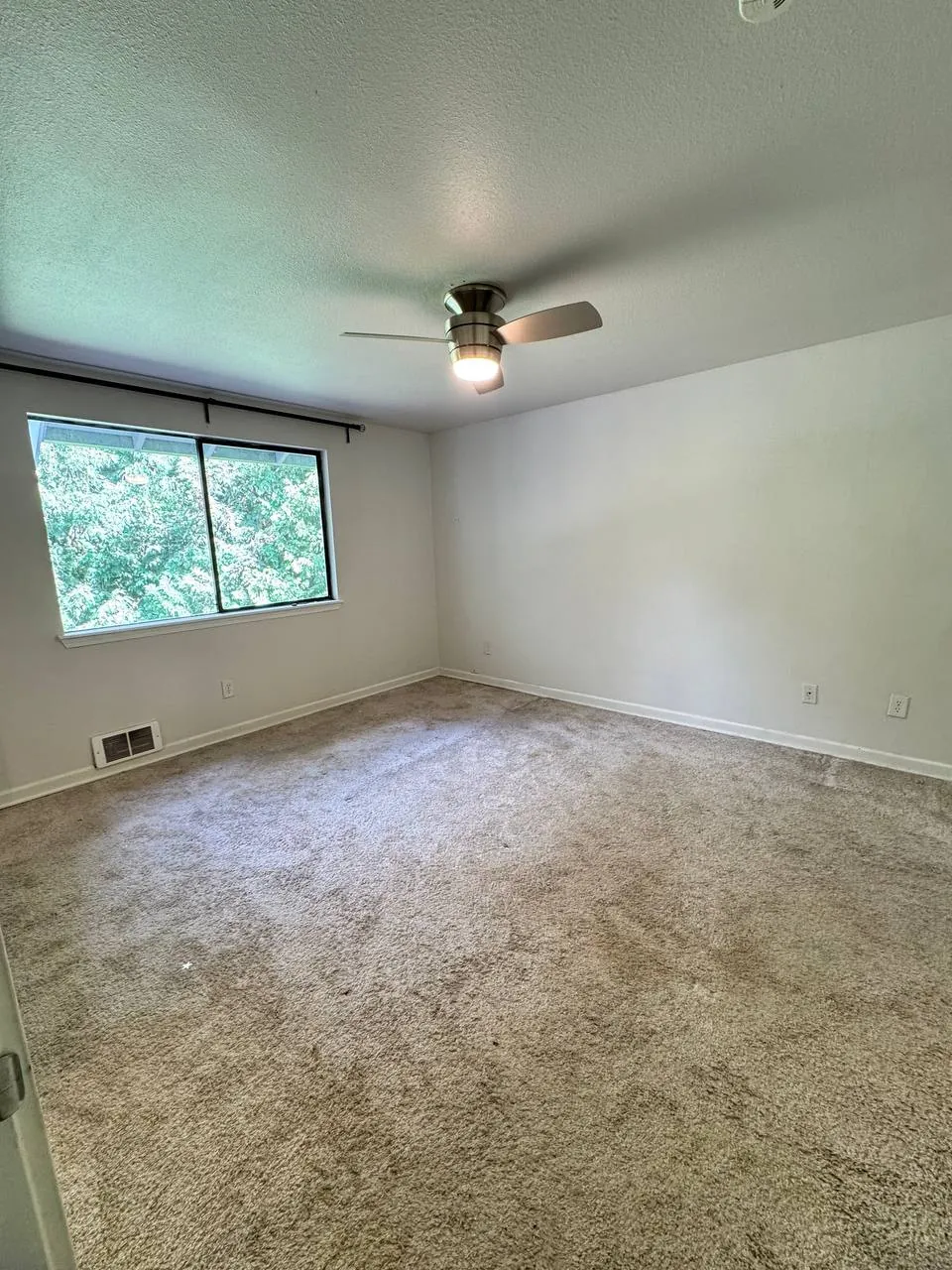 Before
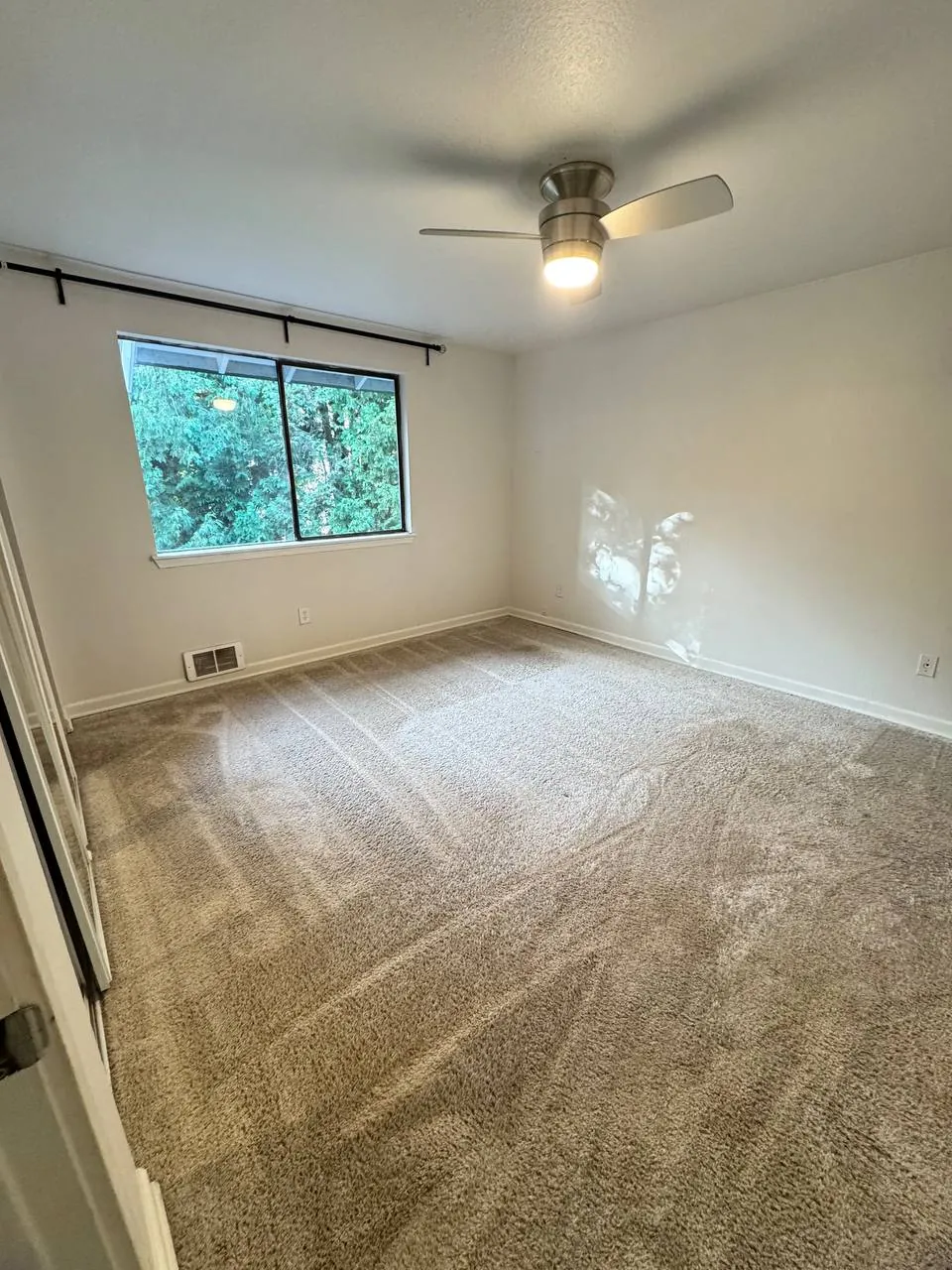 After
Why does urine smell come back after cleaning?
Usually because the urine is deeper than the cleaning reached. Carpet is built in layers, and urine goes straight through the top one. The face fibers hold very little liquid, so it runs through the backing into the pad, which is usually foam and soaks it up like a sponge. A large or repeated accident can reach the wood or concrete subfloor.
Three things make that more likely:
- Repeated accidents in one spot. A puppy or an older dog that keeps using the same corner adds a new layer each time.
- Cat urine. It is more concentrated than dog urine and more likely to have reached the pad, so it helps a lot if you can show us every place the cat has gone.
- Time. An accident blotted right away mostly stays in the fiber. One found days later has spread down and sideways.
The smell often gets stronger on damp days, which are common in our area through fall and winter, because moisture reactivates the dried salts. A spot that smells worse when it rains is probably below the surface. A stain that reappears as the carpet dries is a related problem called wicking, covered in why carpet looks dirty after cleaning.
When does the carpet pad need replacing?
When urine has soaked the pad over a wide area or many times in the same place. The signs are repeated accidents in one spot, odor that returns on humid days, a stain that keeps coming back as the carpet dries, and a smell that is still there after a proper treatment.
In that case, a flooring contractor lifts the carpet in that area, replaces the pad, and if needed cleans and seals the subfloor before the carpet goes back down. We do not do pad replacement, subfloor sealing or carpet lifting. We also cannot see the pad from above, so we say this before any work: urine that soaked into the pad may still smell after cleaning, and if the smell returns after treatment, the pad is likely affected. You decide whether to treat, replace, or both. Treatment alone can still reduce the odor enough for a lightly used room, or as a stopgap until the pad is replaced. For the bigger decision, compare the costs in clean or replace carpet.
If you rent, the history of the carpet matters at move-out. Our article on what Washington landlords can charge for move-out carpet cleaning explains how carpet damage and deposits work.
How do you treat fresh pet urine yourself?
For a fresh accident, plain and fast works:
- Blot up as much as you can with white towels, pressing straight down. Do not rub.
- Pour a little cool water on the spot and blot again.
- Lay a folded towel on it with something heavy on top for a few hours.
- If you use a store enzyme cleaner, follow the label, including the dwell time, and test a hidden spot first.
Avoid steam, irons and hot water, which can set the stain and the odor. Skip bleach, which removes dye, and fragrance sprays, which only cover the smell. Our guide on what to do with carpet stains before professional cleaning has a table for other spills. Old, dried spots are a different story: if you cannot find all of them, or the smell comes from the pad, home treatment rarely reaches it.
How much does pet urine treatment cost?
With us, pet odor treatment is $52 per affected area, on top of the carpet cleaning price. An area is roughly a spot cluster up to about 3 ft by 3 ft. Prices are the same in Lake Stevens and our other licensed cities.
| Item | Price |
|---|---|
| Pet odor treatment | $52 per affected area |
| Carpet cleaning (required with treatment) | from $82 per room |
| Visit minimum | $220 |
| A whole room of repeated accidents | priced from your photos, typically +30% on the room |
| Finding spots: by smell, visible stains and what you tell us | included |
| Pad replacement | not offered; we tell you when it is needed |
Examples: three rooms at $220 plus two treated areas at $52 is $324. One room at $82 plus one treated area at $52 is $134, which is under the minimum, so that visit is $220. Full prices are on our pricing page, and our 2026 Snohomish County carpet cleaning cost guide shows local ranges. For upkeep afterward, see how often to clean carpets with pets.
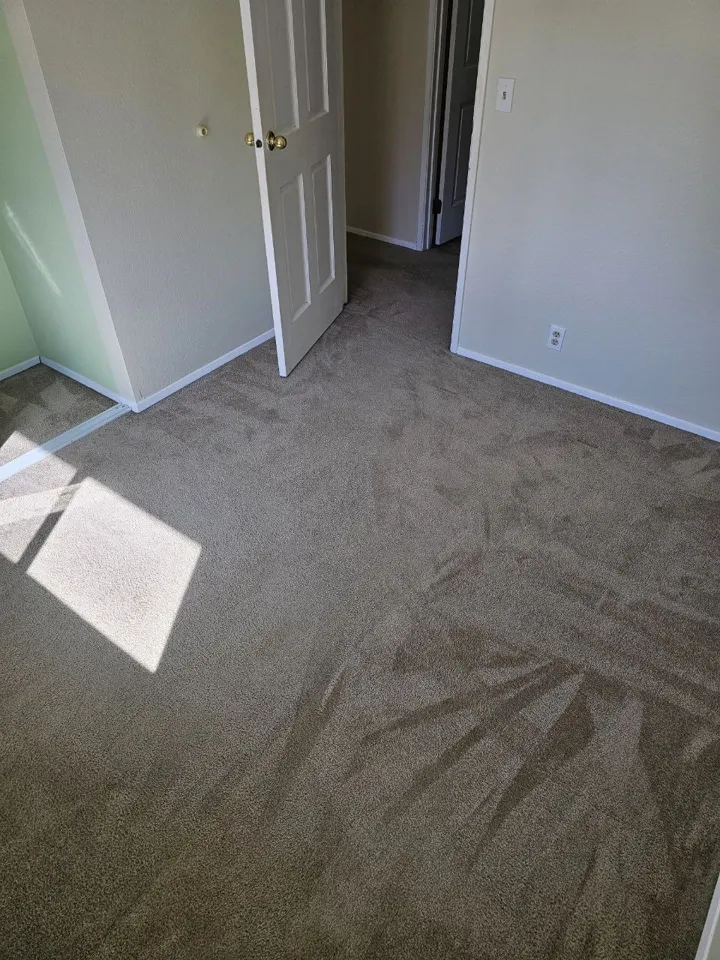 Our job
FAQ
Can regular carpet cleaning make pet urine smell worse?
It can for a while. Moisture reactivates dried urine salts, so plain hot water cleaning over old spots can make the smell stronger as the carpet dries. That is why we ask where the accidents happened, treat those areas first and only then extract, instead of running the extractor over them like ordinary soil.
Enzyme cleaner or oxidizer: which one is used on pet urine?
It depends on the fiber, the color and the age of the spot. Enzyme products break down the organic material over their dwell time; oxygen-based oxidizers work faster on odor but can lighten some dyes. We choose per spot and test in a hidden area first. Neither is bleach or ammonia.
How long does a treated area take to dry?
Treated spots get more product and two or three extra rinse passes, so they are usually the last part of the room to dry. Expect 4 to 8 hours with air movers and a cracked window, and up to 12 in cold, damp weather. Keep pets off those spots until the base of the pile feels dry.
Get a written price
Text 2–4 photos to (425) 539-5492 or request a written quote. Tell us where the accidents happened, roughly how old they are, cat or dog, and what you have tried. We reply with a written price the same business day (Mon–Fri 9am–7pm, Sat 9am–5pm), with a plain note on what we expect to come out and what may stay.
pet urine carpet treatmentpet urinepet odorcarpet cleaningenzyme treatmentcarpet pad