

What to Do With Carpet Stains Before Professional Cleaning (and What Not to Do)
What to do with carpet stains before professional cleaning: blot, cool water, products to avoid, what to tell us. Seattle area. Text for a written price.
By Yuri and Tatiana, owners of Shining Cleanse LLC, a family cleaning company based in Everett, WA and licensed in 10 cities across Snohomish and King County.
What to do with carpet stains before professional cleaning: as little as possible. Scrape off solids, blot with a white cloth, rinse lightly with cool plain water and blot again. Do not rub, do not use heat, and skip bleach and store spotters. Then photograph the spot and note what it was and what you used.
What is the right first aid for a carpet stain?
Fast, gentle and plain. Many stains that end up permanent were made worse early on, by scrubbing, heat or the wrong product. Here is the routine we suggest while you wait for a carpet cleaning visit:
- Remove solids. Lift food, mud or vomit with a spoon or a dull knife, working from the edge toward the center.
- Blot. Press a white cloth or plain white paper towel straight down. Lift, turn to a clean area, press again, until almost nothing transfers.
- Rinse with a little cool water. A few tablespoons from a spray bottle, then blot again. Do not flood the spot, because water that reaches the backing can carry the stain deeper.
- Weight it. Lay a folded white towel on the damp spot with something heavy on top, on a plastic bag, and leave it for a few hours.
- Stop and document. Take a photo, and note what spilled, when, and anything you put on it.
If the stain is still visible after this, leave the rest for the cleaner. Every extra product you try is one more thing the cleaner has to remove first.
Should I blot or scrub a carpet stain?
Always blot. Rubbing pushes the spill deeper into the pile and spreads it sideways, so a small spot turns into a large, faint ring. Shaw Floors’ carpet care guide says to blot spills right away and never rub or scrub abrasively, because scrubbing can fray the fibers. Frayed fiber looks fuzzy and dull even after the stain is gone, and that texture change does not clean out.
Blotting works because a dry, absorbent cloth draws liquid up and out of the fiber. Stiff brushes, scrub pads and paper towels that leave lint behind do more harm than good.
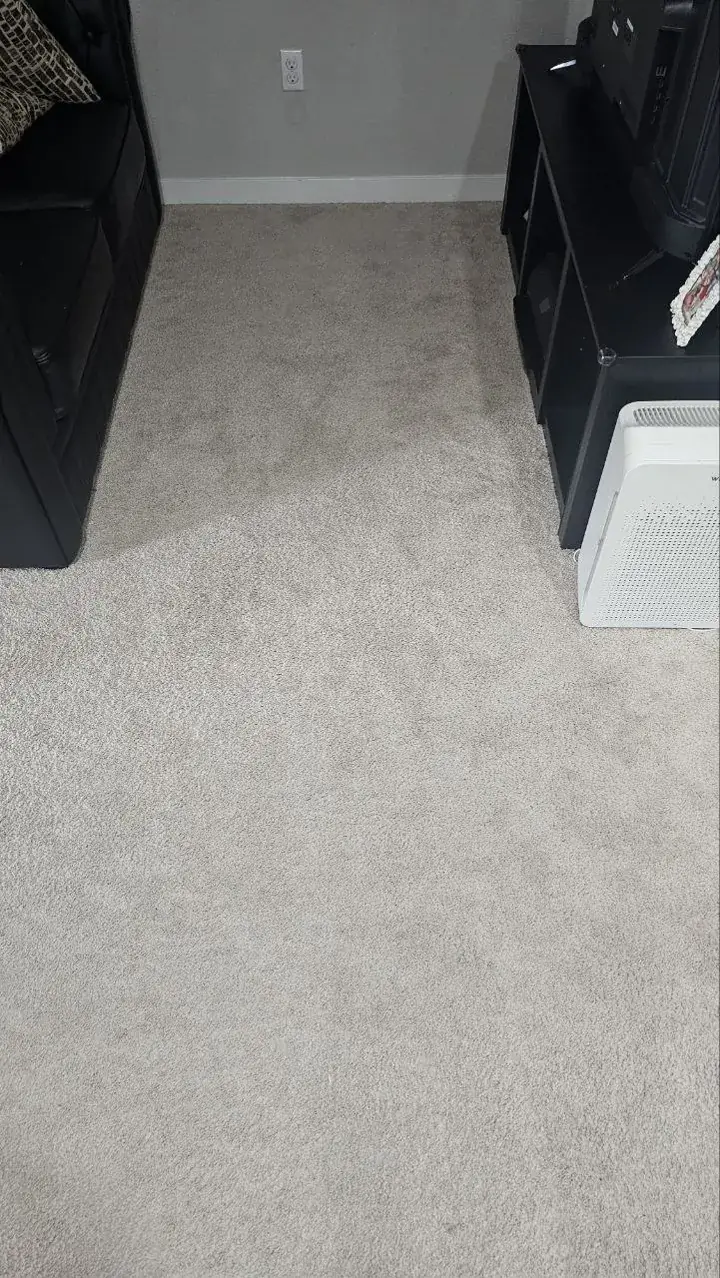 Before
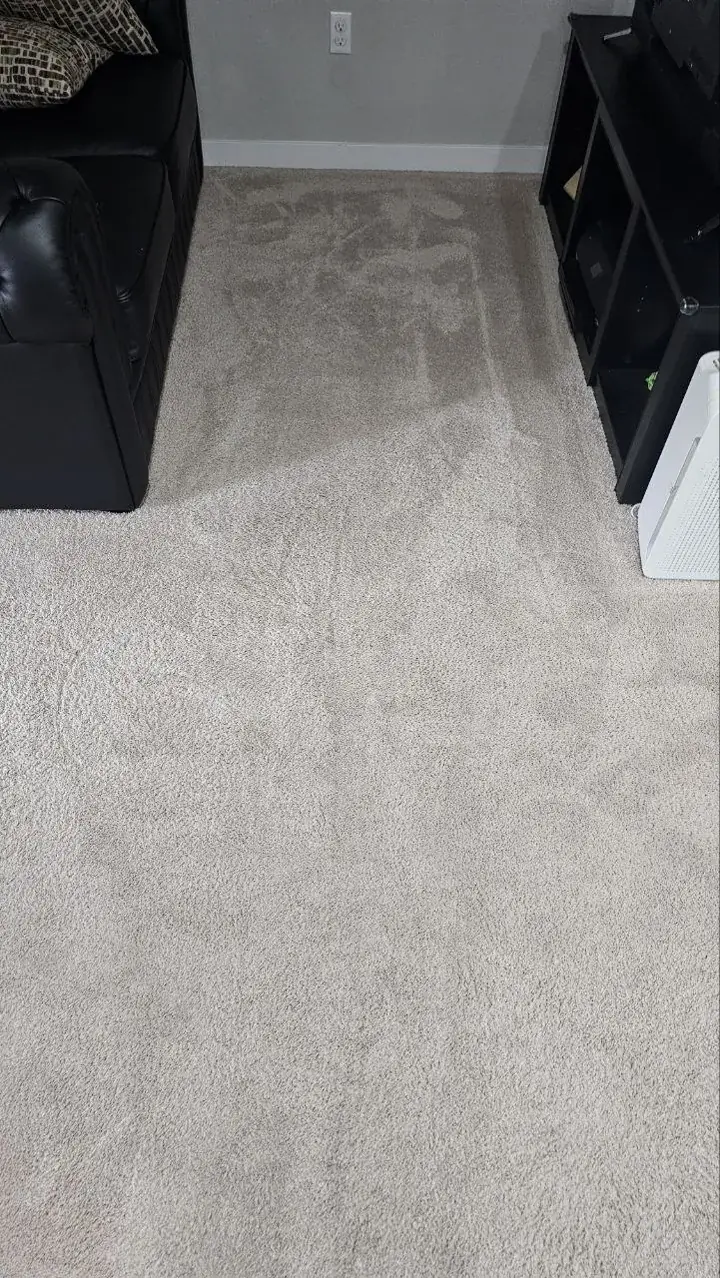 After
Hot or cold water for carpet stains?
Cool or room-temperature water. Heat can set some stains for good: protein stains such as blood, milk, egg and vomit can bind to the fiber when heated. That is why we advise against a hair dryer, an iron, a handheld steamer or very hot water on a fresh stain.
Heat is not the enemy in a controlled cleaning. Hot water extraction uses heated solution after the stain has been identified and pre-treated with the right product, and then pulls everything back out. First aid at home should only make the stain smaller, not try to finish the job.
Which products make carpet stains permanent?
The ones that change the carpet’s color or leave something sticky behind. Avoid these on a stain you plan to have professionally cleaned:
- Bleach and bleach-based sprays. They remove dye. A bleach spot is missing color, not dirt, and no cleaning puts it back.
- Strong oxidizers used without testing. Peroxide-type products can lighten some carpet colors.
- Store spot removers, especially used again and again. Shaw notes that many do-it-yourself spot removal products clean poorly, that their residues attract soil, and that some may contain optical brighteners that can cause a bleaching effect.
- A lot of dish soap. It foams, it is hard to rinse out, and the residue grabs dirt, so the spot comes back darker.
- Fragrance sprays on pet accidents. They only cover the smell and add another layer to remove.
If you already used one of these, that is fine; just tell us which one. It changes what we use next.
Which stains come out, stain by stain?
Most household stains come out: dirt, food, drinks, mud and pet hair. Some do not. This table shows first aid for common spills and what we expect.
| Stain | Do now | Avoid | What to expect |
|---|---|---|---|
| Coffee, tea | Blot, cool water | Hot water, rubbing | Fresh: usually improves. Old: may stay |
| Red wine, red drinks | Blot fast, cool water | Bleach, peroxide | Dye on nylon may not fully come out |
| Blood, milk, egg | Cold water only, blot | Any heat | Usually lifts if not heat-set |
| Grease, cooking oil | Scrape, blot | Lots of dish soap | Usually comes out |
| Mud | Let it dry, then vacuum | Rubbing wet mud | Usually comes out |
| Pet urine | Blot, plain water | Heat, ammonia, fragrance | May be in the pad; old spots can lose color |
| Latex paint | Wet: blot with water | Scraping dried paint hard | Dried latex may not come out |
| Rust | Leave it | Bleach | May not come out |
| Bleach spot | Nothing to clean | Home dye kits | Permanent color loss |
Milk and spit-up are the everyday ones with a newborn; if you are in those weeks, our page on postpartum house cleaning covers help for the first eight weeks.
Pet accidents are their own category. Urine leaves salts and uric acid that normal detergent does not break down, and on old spots the smell usually comes from the pad. Our article on pet urine carpet treatment covers what treatment can and cannot fix.
What should I tell the carpet cleaner about a stain?
What spilled, how long ago, and everything that was put on it. That one message is worth more than any home remedy, because the right product depends on the stain and on what is already in the fiber. When you text us for a quote, include:
- A close photo of each stain and one wider photo of the room.
- What it was, if you know: coffee, juice, wine, paint, pet urine, unknown.
- Roughly when it happened.
- Every product used on it, including the brand name if you have the bottle.
- Whether heat, a steamer or a rental machine has touched it.
On the day, we start with an inspection: each stain is marked and photographed, and we note what has already been tried. Every spot gets the mildest product that works, tested in a hidden area first, and we tell you before we start which stains we expect to improve and which we cannot promise. Our checklist on how to prepare for carpet cleaning covers the rest of the prep.
Which stains stay, and when do you need a specialist?
Some stains are color changes rather than dirt, and others bond so firmly to the fiber that cleaning may not remove them: dye from red drinks or wine on nylon, bleach spots, rust, dried latex paint, old coffee or tea, and old urine that has taken the color out. A stain already set with heat or the wrong store product may also stay.
We clean wall-to-wall carpet in Kenmore and our other licensed cities, but wool, silk, viscose and antique rugs need a rug specialist, and we refer those out. Carpet that has lost color or been burned needs repair or patching, not cleaning. Flood damage, mold and carpet repair are outside what we do as well.
If a treated spot wicks back up as the carpet dries, text us a photo within 48 hours and we re-treat that area at no charge. Our guide to why carpet looks dirty after cleaning explains why that happens, and how often to clean carpets with kids and pets helps you avoid buildup. If you are still deciding whether to book a pro at all, see whether professional carpet cleaning is worth it.
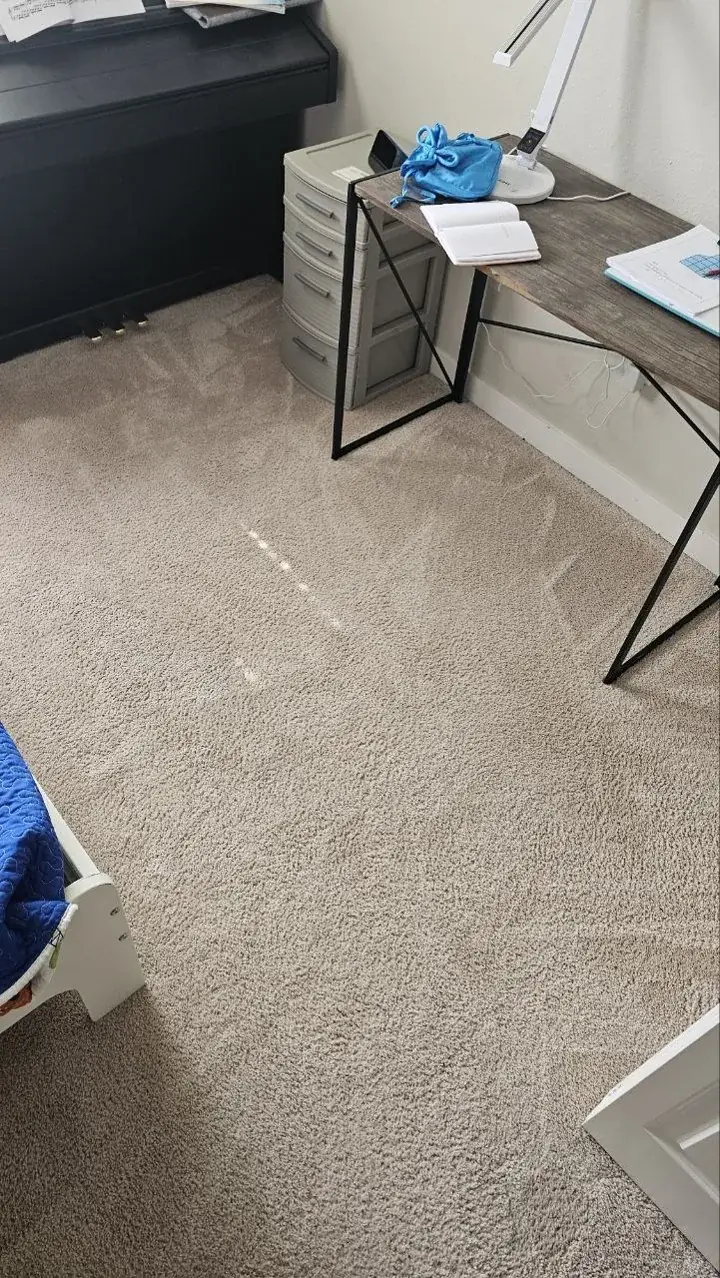 Our job
FAQ
Should I put baking soda or vinegar on a carpet stain?
We suggest skipping both before a professional visit. Baking soda works down into the pile as a powder that has to be vacuumed and rinsed out, and vinegar mixed with other products makes the stain harder to read. Cool water and blotting are enough for first aid. If you already used either, just tell us.
How long can a carpet stain wait for a professional?
Sooner is easier for dyes and pet urine, but the days matter less than what happens to the stain while it waits. A spot that was blotted and then left alone is usually less of a problem than one that was scrubbed, heated or treated with several products in a row.
Do carpet cleaners charge extra for stains?
It depends on the company, so ask before you book. With us, spot treatment of most household stains is included in the room price. Pet urine is a separate treatment at $52 per affected area, and heavy soil is decided from your photos before the visit, never on the day. Full prices are on our pricing page.
Get a written price
Text 2–4 photos to (425) 539-5492 or request a written quote, with what was spilled and what you used. We reply with a written price the same business day (Mon–Fri 9am–7pm, Sat 9am–5pm), and a straight answer on which stains we expect to come out.
what to do with carpet stains before professional cleaningcarpet stainscarpet cleaningspot removalpet urinediy