

Clinic Cleaning Protocol for Washington Outpatient Clinics: Terminal Cleans, Procedure Rooms, Frequency
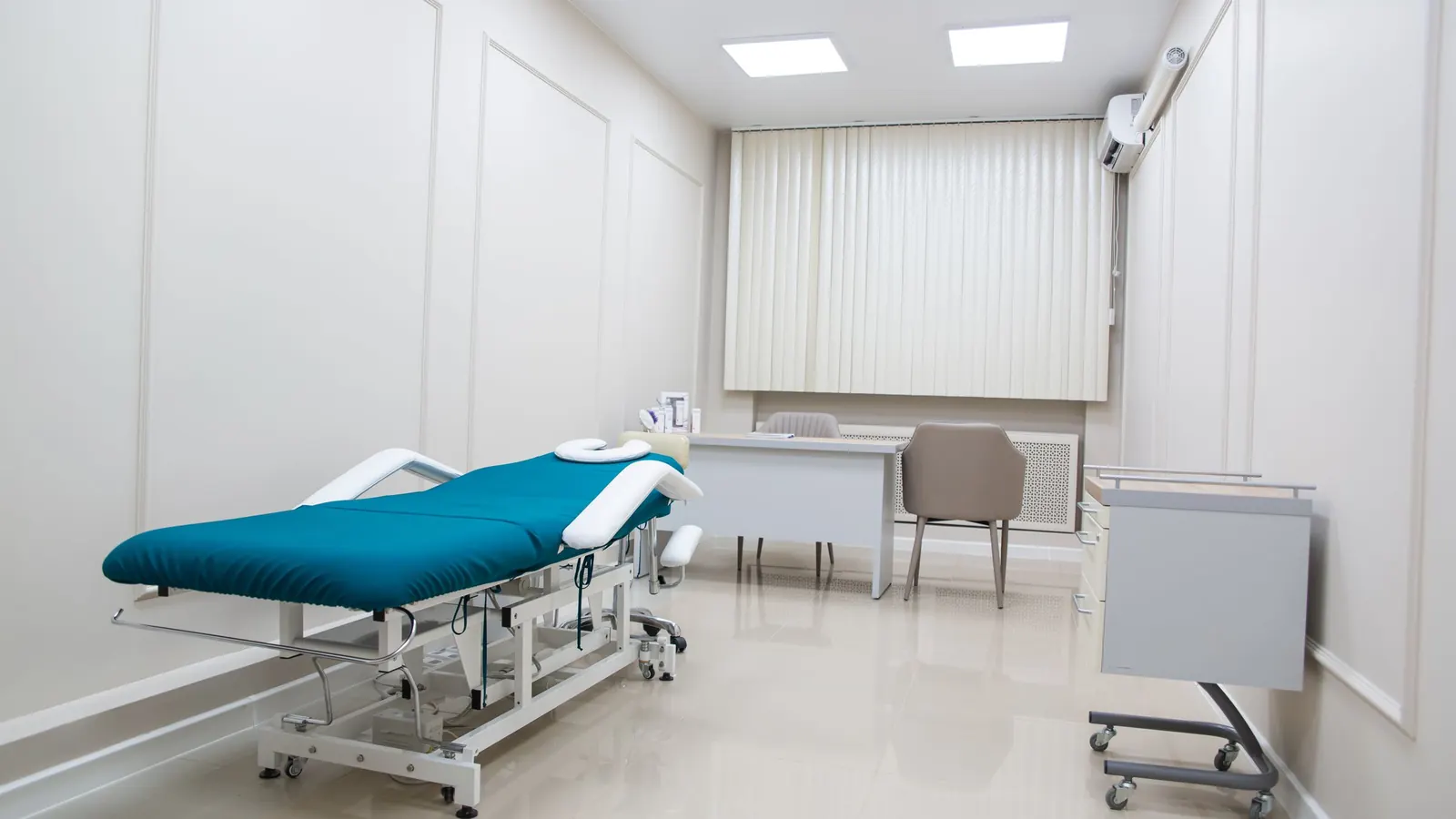
A clinic cleaning protocol: terminal cleans, procedure-room frequency, high-touch surfaces and logs. Snohomish & King County. Text for a written price.
By Yuri and Tatiana, owners of Shining Cleanse LLC, a family cleaning company based in Everett, WA and licensed in 10 cities across Snohomish and King County.
A clinic cleaning protocol has four parts: daily after-hours cleaning and disinfection of every clinical room, a terminal clean of procedure rooms at the end of the day, a sporicidal agent when the practice flags C. diff or a similar exposure, and a signed log of agent, dwell time, room and date. Between-patient turnover stays with clinical staff.
This guide is about the protocol. If you are comparing cleaners and prices for a general practice or dental office, read our medical office cleaning buyer guide instead.
How is a clinic clean different from a medical office clean?
A medical office clean covers reception, exam rooms, restrooms and admin space. A clinic (urgent care, procedure clinic, dental surgery, infusion) shares that base and adds three layers:
- Procedure rooms need a terminal clean rather than a wipe-down
- Higher-risk organisms such as C. diff call for sporicidal agents, not only standard List N products
- Logs are more detailed, because surveyors and accreditation bodies ask to see them
Both run on the same medical and dental cleaning service; the scope document is what changes.
What is a terminal clean in a clinic?
CDC guidance on environmental cleaning describes terminal cleaning as a thorough cleaning and disinfection of a patient area after discharge or transfer, and of procedure rooms at the end of the day. In a clinic, it looks like this:
- Single-use items and regulated medical waste removed by clinical staff before we start
- Soiled linens bagged by staff
- Top-down: vents, lights, shelves, walls if soiled, equipment exteriors, table, chairs, then floor
- An EPA-registered disinfectant on all touched horizontal and vertical surfaces, left wet for the label dwell time
- For a known C. diff case: a sporicidal agent, typically sodium hypochlorite or peracetic acid, instead of a quat or peroxide product
- Floor: detergent wash, then a disinfectant pass with a mop head dedicated to that room
- Log entry: room, agent, dwell time observed, date, who cleaned
It takes much longer than a between-patient wipe, which is why it is scheduled, not squeezed in.
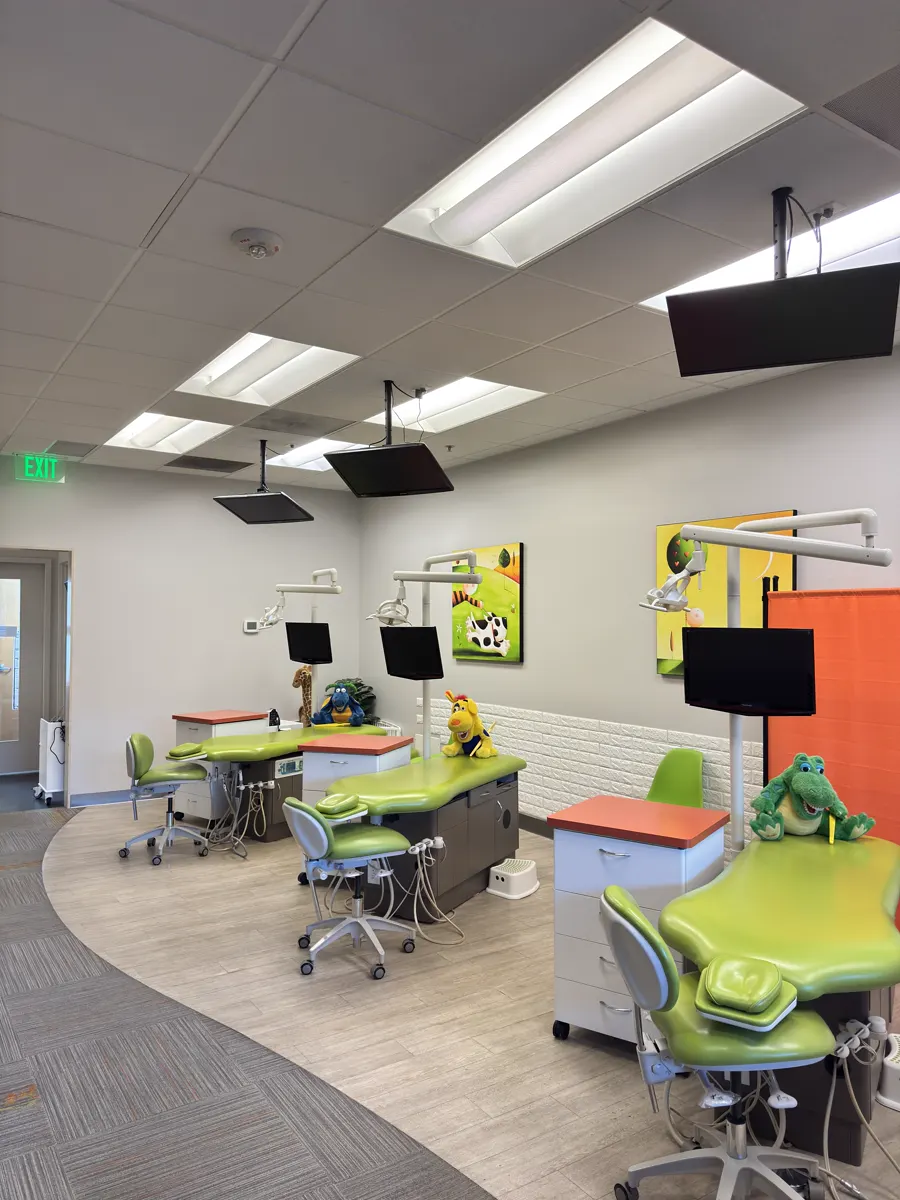 Our job
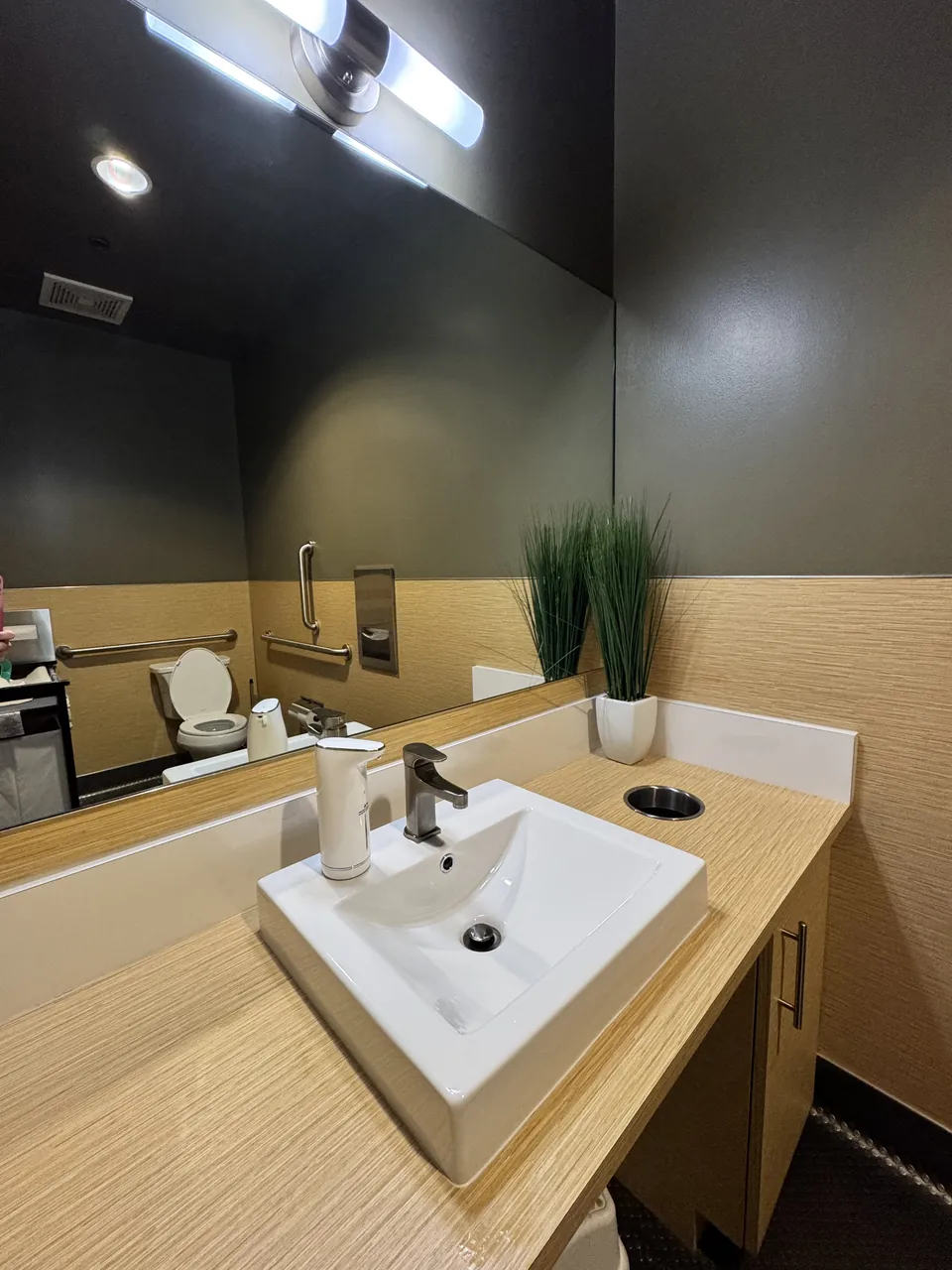 Our job
How often should procedure rooms be cleaned?
Between cases on the same day, clinical staff do a lighter turnover: single-use items out, sharps to the container, touched surfaces wiped with a List N disinfectant, drapes replaced, spot-mop if needed. Our part is everything after hours:
- Daily: all clinical surfaces disinfected with dwell time; clinical floors washed then disinfected; restrooms fully reset.
- Weekly: walls spot-cleaned, vent grilles, under and behind movable equipment, cabinet exteriors.
- Monthly: returns and vents in depth, equipment exteriors (refrigerators, autoclave exterior, ice machine), baseboards detailed.
- Terminal: procedure spaces at the end of every clinic day, plus after cases that need a sporicidal agent.
Which high-touch surfaces in a clinic matter most?
The ones touched by many hands between our visits. We split them with your staff like this:
| Area | High-touch surfaces | Between patients | After hours |
|---|---|---|---|
| Exam and procedure rooms | table surface and rails, paper-roll holder, stool, chair arms, light handles, drawer pulls | clinical staff | us, with dwell time |
| Diagnostic equipment | BP cuff, pulse-ox, otoscope and thermometer handles | clinical staff | exteriors only, if you ask |
| Workstations | keyboards, mice, phones, touchscreens | staff | us, with a product safe for electronics |
| Sinks | faucet, handles, soap and sanitizer pumps, counter edge | us | |
| Restrooms | flush handle, grab bars, lock, dispensers | us, red cloths only | |
| Reception and corridors | counter, pens, kiosk, door handles, light switches, wheelchair handles, water cooler | us |
Which disinfectant does a clinic protocol use?
- Quaternary ammonium: 5–10 minute contact time, gentle on surfaces, for low-risk areas. Not effective against C. diff spores.
- Accelerated hydrogen peroxide: 1–3 minute contact time, broad label; what we usually use in clinical rooms.
- Sodium hypochlorite: sporicidal, used for C. diff; hard on some metals and plastics; PPE required.
- Peracetic acid: sporicidal and fast, more expensive, for higher-acuity settings.
The product is a clinical decision. Your medical director or infection-control lead specifies it, and we keep its SDS on site. We do terminal cleans for spore-forming exposures only when the practice gives us the agent and protocol in writing.
Dry steam, 290°F at the nozzle, has a place in restrooms and on grout, but never instead of the specified disinfectant; see steam cleaning vs chemical cleaning.
What documentation should a clinic cleaner provide?
- A checklist signed after every visit and kept on site
- Terminal-clean entries: room, agent, dwell time, date, who cleaned
- SDS sheets for every product we bring
- A monthly summary of what was cleaned and anything we noticed, such as a leaking faucet or a worn floor seal
Microfiber is color-coded by zone (restrooms, clinical rooms, lab, admin) and laundered separately by color, and the clinical mop never touches admin floors.
For budgets: clinics start at $447 per visit under 1,500 sq ft, $657 for 1,500–3,500 sq ft and $0.22 per sq ft above that, with terminal-clean events quoted in writing. See pricing and how that compares in commercial cleaning costs in the Seattle area. We clean clinics in Kirkland and our other licensed cities.
 Our job
FAQ
Do you clean inside autoclaves or specimen refrigerators?
No. We wipe exteriors only. Autoclave interiors, instrument sterilization and specimen refrigerator interiors stay with your clinical staff, because what goes in and out of them is a clinical process.
What PPE do you wear in a clinic?
Disposable gloves changed between rooms, and eye protection in the lab and in rooms flagged for a sporicidal clean. Gloves come off and are bagged before we touch anything in the next room.
Can our infection-control lead change the product list?
Yes, at any time. Text us the product name; we switch to it on the next visit, follow its label dwell time and add its SDS to the binder.
Get a written price for your clinic
Text 2–4 photos of the space to (425) 539-5492 or request a written quote. We reply with a written price the same business day (Mon–Fri 9am–7pm, Sat 9am–5pm). For a recurring contract, add a floor plan or the square footage and your protocol; we ask any questions by text and confirm the price in writing.
clinic cleaningclinic cleaning protocolterminal cleanprocedure roominfection preventionEPA List NCDC guidelinesSnohomish CountyKing County