

Move-Out Checklist for Landlords: What to Inspect Before Returning a Deposit
Move-out checklist for landlords in Washington: inspect room by room, compare with the move-in checklist, document charges. Text for a written price.
By Yuri and Tatiana, owners of Shining Cleanse LLC, a family cleaning company based in Everett, WA and licensed in 10 cities across Snohomish and King County.
A move-out checklist for landlords compares the empty unit, room by room, with the signed move-in checklist Washington requires under RCW 59.18.260. Photograph every room from the move-in angles, note cleanliness separately from damage, and back every charge with an invoice or estimate: you have 30 days to send a full and specific statement under RCW 59.18.280.
This checklist covers the same areas we clean on turnovers for landlords and property managers and on move-out cleanings, turned around for the person doing the inspection. This is general information, not legal advice.
What should you bring to the move-out inspection?
Without the move-in record, you have nothing to compare against. Bring:
- The signed move-in checklist. Under RCW 59.18.260, a landlord who collects a deposit must give the tenant a written checklist or statement describing the condition and cleanliness of, or existing damage to, the premises and its fixtures, appliances and furnishings, signed and dated by both sides.
- Move-in photos, if you took them, so you can match angles.
- The lease, open to the deposit terms. The same statute requires the written agreement to state the terms under which the deposit may be withheld.
- A flashlight for the inside of the oven, under sinks and the back of closets.
- A form with two columns per room: cleanliness and damage.
Inspect after the tenant has removed everything. Furniture and boxes hide exactly what you are looking for.
What should a landlord inspect at move-out?
Work through the unit in the same order every time, and note what you see in plain words, not conclusions.
Kitchen
- Inside the oven: floor, walls, door glass, racks, the drawer underneath
- Stovetop, burners or glass top, range hood and filter
- Inside the fridge and freezer: shelves, drawers, door seals
- Inside every cabinet and drawer, including shelf edges and tracks
- Sink, faucet, disposal; dishwasher filter and door edges
- Backsplash, cabinet fronts, tops of the fridge and upper cabinets
Bathrooms
- Toilet inside, outside and around the base
- Tub and shower: soap scum, scale on glass and fixtures, grout and caulk
- Vanity inside and out, mirror, medicine cabinet
- Exhaust fan cover, light fixture, floor behind the door
Every room
- Baseboards, door frames, doors and switch plates
- Walls: marks, scuffs, holes, anything taped or stuck on
- Window sills, tracks and glass; blinds
- Closet shelves, rods and floor
- Light fixtures, ceiling fans, vent covers
Floors and carpet
- Hard floors: residue, sticky spots, scratches, water marks
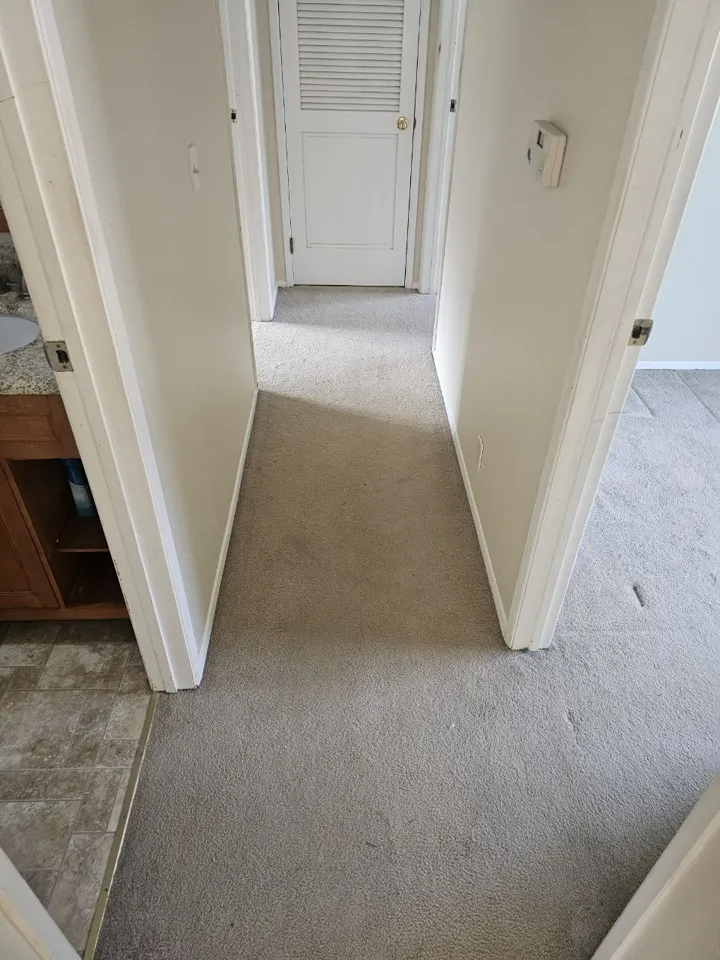
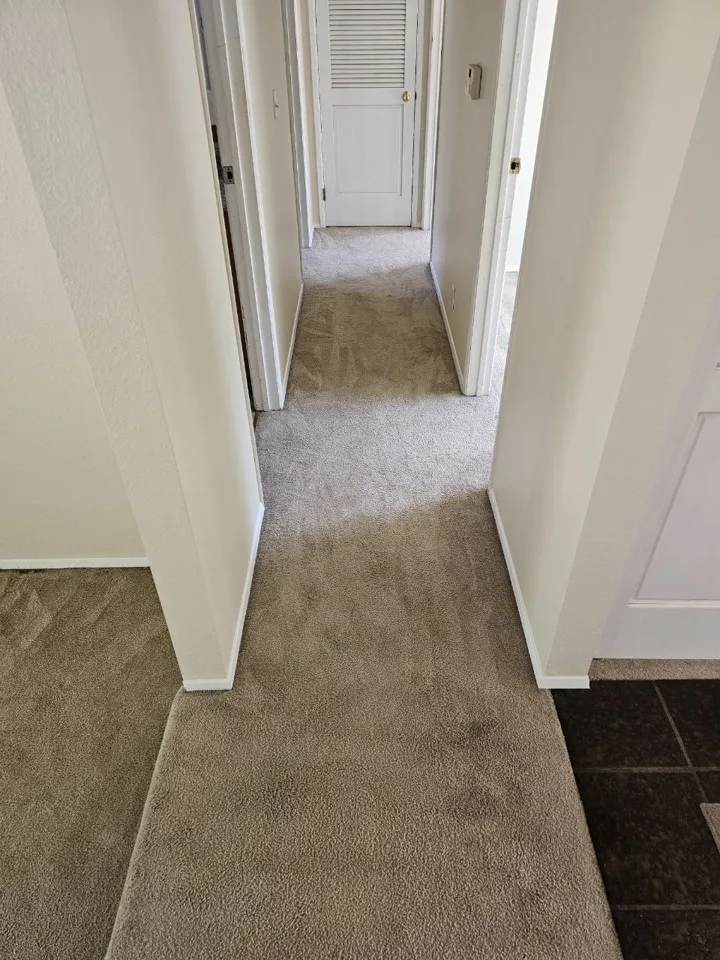
- Carpet: soil in traffic lanes, spots, stains, odor, burns
Before you leave
- All keys, garage remotes and mailbox keys returned
- The tenant’s forwarding address in writing
 Before
 After
How should you photograph the unit?
Take a wide photo of each room from the doorway, then close-ups of anything you note on the form. Match the move-in angles so the two sets can be laid side by side, and make sure each photo is dated.
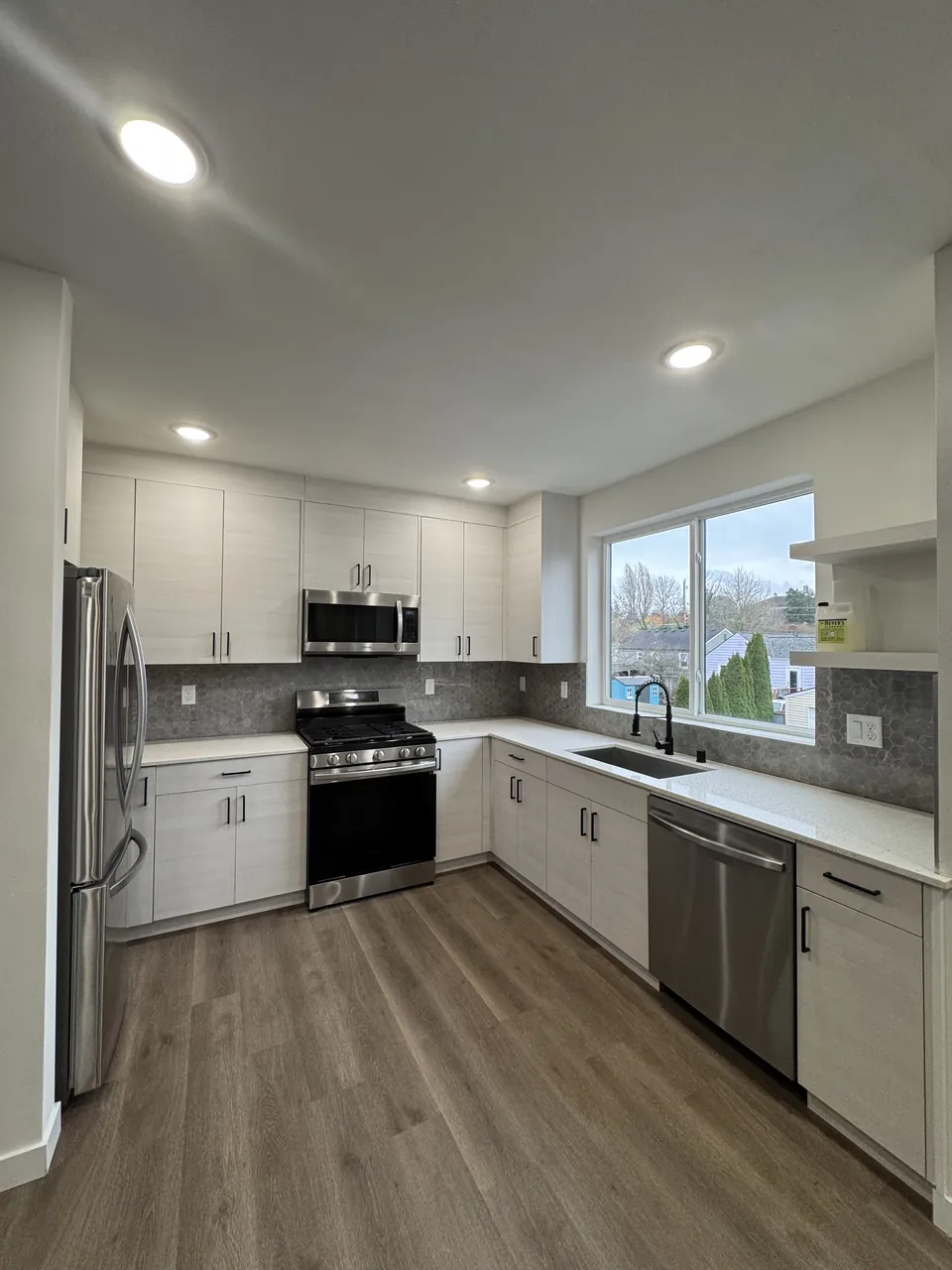
Photograph inside the oven, fridge and cabinets with the doors open, because that is where cleaning charges usually come from. For carpet, shoot at a low angle with light from the window; it shows traffic lanes and stains clearly. Our own reports work the same way: a before and an after photo of each room from the same spot, with a one-line neutral note.
Write neutral notes: “grease on oven floor”, “two drywall anchors in bedroom wall”, “carpet worn in hallway”. Whether something is ordinary wear, damage or a cleaning issue is decided later, against the move-in checklist.
What is normal wear and tear versus a cleaning charge?
Read each line of the move-in checklist, then look at the same item now. A charge holds up when the move-in record shows the item clean or undamaged, the move-out record shows a change, and that change goes beyond ordinary use.
| Move-in checklist says | Move-out finding | How it usually reads |
|---|---|---|
| Oven clean | Baked-on grease on floor and racks | Cleaning issue |
| Carpet clean, no stains | Worn path in the hallway | Wear from ordinary use |
| Carpet clean, no stains | Large red stain in the bedroom | Beyond ordinary use |
| Bathroom clean | Soap scum and mildew on grout | Cleaning issue |
| Walls freshly painted | Light scuffs near the switches | Wear from ordinary use |
| Walls freshly painted | Fist-size hole behind a door | Damage |
| Dishwasher not described | Broken rack | Hard to charge: condition not documented |
That last row matters. RCW 59.18.280 says a landlord may not charge for repair or replacement of fixtures, equipment, appliances or furnishings whose condition was not reasonably documented in the move-in checklist. More examples are in our guide to normal wear and tear vs damage in a Washington rental.
How do I document cleaning charges in Washington?
Charges need paperwork behind them. What RCW 59.18.280 asks for, in plain terms:
- Copies of estimates received or invoices paid that support each charge.
- If you or your employee did the work and charged for materials, the bill, invoice or receipt for those materials. For supplies kept on hand, a vendor price list or similar document can work.
- If you or your employee did the work, a statement of the time spent and the reasonable hourly rate.
The statute also limits what can be charged. No deduction for wear from ordinary use. No deduction for carpet cleaning unless you document wear to the carpet beyond ordinary use. Where only part of an item is damaged, no more than the cost to repair or replace that part. For a closer look at cleaning deductions, see can a landlord charge for cleaning in Washington.
How long does a landlord have to return a deposit in Washington?
30 days. Within 30 days after the tenancy ends and the tenant moves out, RCW 59.18.280 requires a full and specific statement of the basis for keeping any part of the deposit, with the supporting documents and any refund due. It must be delivered personally or by first-class mail to the tenant’s last known address within that window.
A landlord who misses the deadline or the documentation can be liable for the full deposit, and a court may award up to two times the deposit when the refusal to return it was intentional. Inspect early, so the 30 days go to paperwork rather than waiting.
When should you hire the cleaning out?
When the unit has to be ready by a date, or when you want a third-party invoice and photos to support a charge. A vendor invoice is the simplest documentation the statute describes.
Our turnover cleaning is a fixed price by unit: $316 for a studio or 1-bedroom, $366 for a 2-bedroom and $416 for a 3-bedroom, with the fridge, oven, interior windows and inside of every cabinet included. Carpet extraction in the same visit is $156, $196 or $236 by unit size (all prices on our pricing page). Every unit gets a dated photo report, in Mukilteo and our other licensed cities. We do not decide deposit questions for you; we document what we found and what we did. Agents booking a vacant listing can read how it works with lockboxes and photo reports in cleaning services for realtors, and hosts turning over a short-term rental can use our guide on how to find an Airbnb cleaner.
How a full turnover runs is in our guide to apartment turnover cleaning for property managers. What tenants are told to do is in our move-out cleaning checklist for Washington tenants, and market prices are in move-out cleaning cost in the Seattle area.
 Our job
FAQ
How soon after move-out should I inspect the unit?
As soon as it is empty and before any cleaner, painter or maintenance person goes in. Your photos then show the unit as the tenant left it, and the 30-day clock is still mostly ahead of you.
Should the tenant be at the move-out inspection?
A joint walk-through lets both sides see the same things and can settle questions on the spot. If the tenant cannot come, your dated photos and neutral notes carry the record. Check your lease for any walk-through terms you agreed to.
Do I still need my own photos if the cleaner sends a report?
Yes. Your photos show the condition the tenant left. A cleaner’s before-and-after set and invoice show what work was done and what it cost. Together they answer both questions a deduction raises.
Get a written price
Text 2–4 photos of the kitchen and bathrooms, the unit size and the ready-by date to (425) 539-5492 or request a written quote. We reply with a written price the same business day (Mon–Fri 9am–7pm, Sat 9am–5pm).
move out checklist for landlordslandlordsmove-out inspectionsecurity depositchecklistproperty management